
Voice Commerce in 2026: Why Your E-commerce Store Needs It
Voice commerce — the ability to shop using spoken language — has moved from science fiction to practical reality. With Google's Gemini Live API and OpenAI's Realtime API, customers can now have real-time, natural conversations with AI shopping assistants. Voice is the next frontier of how AI is transforming e-commerce.
This post covers what voice commerce actually looks like in 2026, the technical architecture behind it, realistic cost and adoption expectations, and a staged rollout path for Magento stores.
The Numbers
- 71% of consumers prefer voice search over typing (PwC).
- Voice commerce sales are projected to reach $80B+ globally in 2026.
- Conversion rates for voice-assisted shopping run 2-3x higher than keyword search on the sessions where customers actually use voice.
- Less than 5% of e-commerce stores offer any voice capability today.
The gap between consumer preference and store adoption is the opportunity. Early movers are capturing outsized share of voice-native traffic before it becomes the default.
What Voice Commerce Actually Looks Like
Forget the clunky "Alexa, order more paper towels" experience of 2018. Modern voice commerce, built on models like Gemini Live and OpenAI Realtime, has four defining characteristics:
Full-duplex conversation — You can interrupt the AI mid-sentence, just like talking to a person. No "please wait for the beep." This is the single biggest UX improvement over old voice bots and is only possible because the underlying audio pipeline is full-duplex (the model is listening while speaking).
Visual + verbal — The AI speaks while simultaneously showing product cards, comparison tables, and pricing on screen. It's like a sales associate who can both talk and point at things. The visual layer is rendered by your Magento frontend based on structured tool calls from the voice AI, not scraped from text.
Context-aware — "Show me something similar but cheaper" works because the AI remembers what you were just looking at in the same session. "Add the blue one to my cart" works because the AI has maintained the conversation state.
Multilingual — The same voice AI can serve customers in 70+ languages without hiring multilingual staff. Language detection happens automatically based on the first few seconds of speech.
Why Magento Stores Should Care
1. Accessibility
Voice shopping opens your store to customers with visual impairments, mobility limitations, or temporary situations (hands busy, eyes on the road). This is both a business opportunity and an ethical baseline — voice support is increasingly expected for WCAG 2.2 compliance and similar accessibility frameworks.
2. Mobile experience
Typing on a mobile phone is painful. Speaking is natural. Voice commerce dramatically improves the mobile shopping experience, where 60%+ of e-commerce traffic now originates. Stores with strong mobile voice see markedly higher mobile conversion rates than stores relying on thumb-typing through a 4-inch search box.
3. Differentiation
Your competitors are still using search boxes from 2015. Voice commerce instantly positions your store as innovative and customer-focused. This matters most in commoditized categories (consumer electronics, apparel, home goods) where product differentiation is thin and experience differentiation is everything.
4. Higher engagement and intent signal
Voice interactions are longer and more detailed than text chats. Customers who talk to your AI assistant spend more time on your store and are more likely to find what they need — because they explain intent in sentences rather than two-word keyword fragments. The same conversation gives you richer analytics data about what customers actually want, which feeds back into merchandising and content decisions.
5. B2B reorder flows
This one is underappreciated. For B2B Magento stores where a buyer places a recurring order of dozens of SKUs, voice is faster than any UI: "reorder last month's shipment but swap the blue widgets for red, and double the quantity on item 12." A text interface or catalog grid cannot match that speed.
Three Levels of Voice Implementation
Not all voice is created equal, and you don't have to jump to the gold standard immediately.
Level 1: Text-to-Speech (TTS) output only — The AI reads its text responses aloud using browser-native TTS or a cloud TTS API. Simple to implement, immediately useful for accessibility. Customers still type the input.
Level 2: Speech-to-Text (STT) + TTS round-trip — Customers speak, their words are converted to text, processed by a normal text LLM, and the response is read aloud via TTS. Good but has noticeable latency (typically 1.5-3 seconds end-to-end) because each stage runs sequentially.
Level 3: Real-time Live API — True full-duplex voice conversation with sub-500ms latency. The customer and AI talk naturally, with interruption support and context retention. This is the gold standard, enabled by Gemini Live and OpenAI Realtime.
Most stores should start at Level 1 or 2 and upgrade to Level 3 once voice usage justifies the cost and complexity. Jumping straight to Level 3 is fine if you have engineering capacity and are confident voice is a strategic priority.
Architecture for Level 3 Voice on Magento
A production Level 3 voice implementation on Magento 2 has four components:
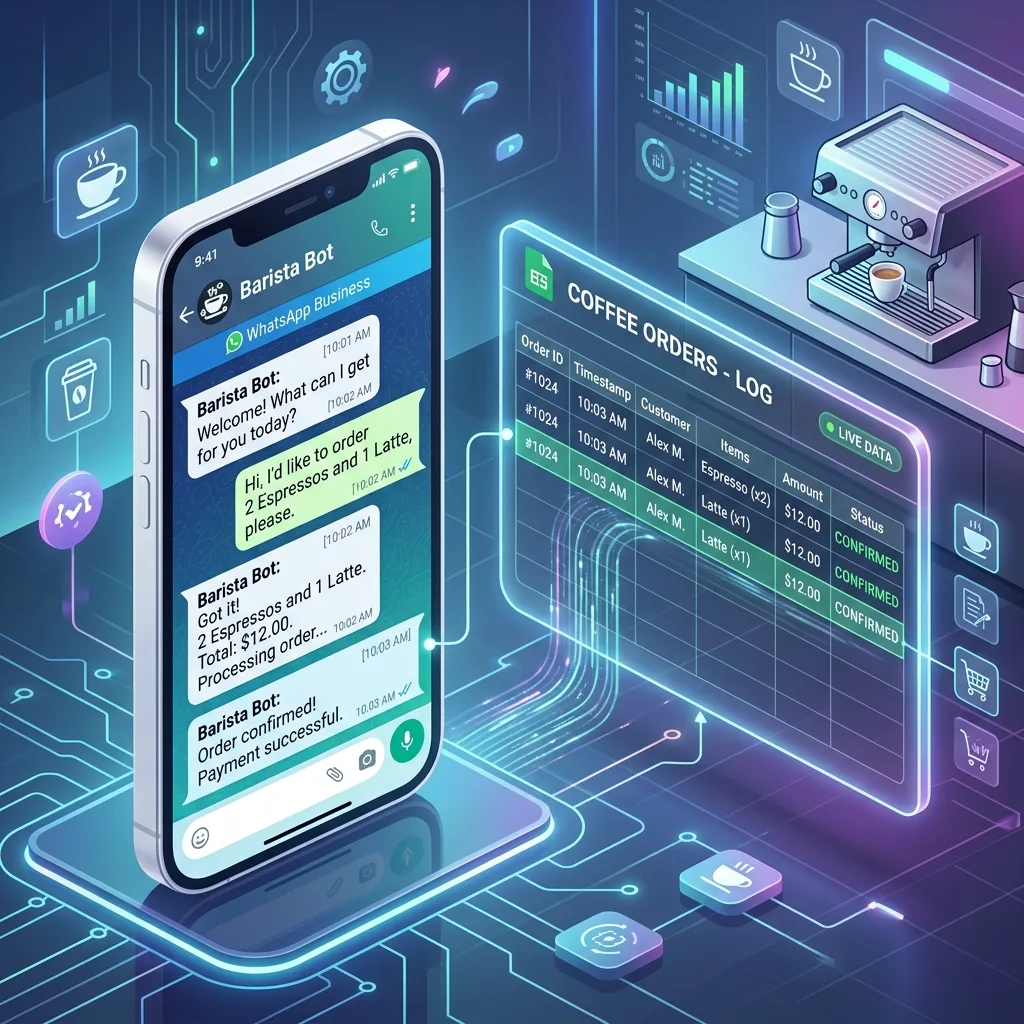
- Client-side widget. A JavaScript widget (embeddable on any Magento theme) that captures microphone audio via WebRTC and streams it to the voice API. The same widget renders AI responses: audio playback, product cards, comparison tables, add-to-cart buttons.
- Voice API connection. Direct WebRTC/WebSocket connection from the client to Gemini Live or OpenAI Realtime. Audio streams in and out; the model handles VAD (voice activity detection), turn-taking, and interruption internally.
- Backend for catalog and cart. A thin Magento backend (or direct REST/GraphQL calls from the voice AI via function calling) that resolves product lookups, checks stock, applies discounts, and processes add-to-cart actions. This is the grounding layer — it's what prevents the AI from hallucinating SKUs or prices.
- Analytics pipeline. Capture conversation transcripts, function calls, and outcomes (converted, escalated, abandoned). Pipe into your existing analytics stack for weekly review. Without this, you can't tune.
The architecture is surprisingly lightweight because the voice API handles all the hard audio-processing work. The main engineering effort goes into catalog grounding and the visual-sync between AI speech and product rendering.
Cost and Rollout Expectations
Realistic cost for a small-to-medium Magento store (~30k monthly sessions, 5-10% engaging with voice):
- Voice API usage: $500-$2,000/month depending on conversation length and adoption.
- Engineering: 2-4 weeks for initial Level 3 deployment; 5-10 hours/month ongoing for prompt tuning and analytics review.
- Infrastructure: negligible — WebRTC connections go client-to-API, not through your servers.
Rollout sequence we recommend:
- Week 1-2: Install Level 1 TTS on the existing text chatbot. Low risk, immediate accessibility win.
- Week 3-4: Add Level 2 STT input behind a "tap to speak" button. Monitor usage rate and error rate.
- Month 2-3: If voice engagement is above 5% of chat sessions and CSAT on voice conversations is strong, upgrade to Level 3 via Gemini Live or OpenAI Realtime.
- Month 4+: Expand visual-sync generative UI (product carousels that update as the AI speaks), add voice-only checkout, layer on multilingual routing.
Common Pitfalls
- Skipping catalog grounding. Hallucinated product details on voice are worse than on text — customers can't scroll back to verify, and the AI's confident tone makes wrong answers more persuasive. Always ground via real-time catalog function calls.
- Poor latency. Any delay over 500ms between user speech and AI response feels broken. If your infrastructure is adding latency, fix that before scaling rollout.
- No escape hatch. Some customers want text, some want voice, some want a human. Always offer all three one click away.
- Voice-only checkout too early. Customers trust voice for discovery but often want visual confirmation before hitting "place order". Allow voice-to-cart, but let customers review and complete the checkout visually until trust is established.
Getting Started
The easiest path to voice commerce on Magento is to layer it onto an existing AI chat deployment. If you don't have that yet, see how to add AI chat to your Magento 2 store — get text working first, then add voice as a progressive enhancement.
On the catalog side, voice grounding is only as good as your product data. Our Magento AI Product Manager handles the enrichment pass that makes voice responses accurate rather than plausible-sounding guesses. That upstream investment pays off disproportionately on voice compared to text.
The stores that adopt voice commerce now will have a significant head start when it becomes the norm — and that day is coming faster than most people think.
Further Reading
- How AI is transforming e-commerce — the full pillar context.
- How to add AI chat to your Magento 2 store — the text-chat foundation.
- Magento AI chatbot vs live chat — when to use AI vs humans.
- 5 ways AI increases e-commerce conversion rates — conversion-side tactics that apply to voice too.
- AI-driven product enrichment for Magento catalogs — the grounding prerequisite.
Frequently Asked Questions
Is voice commerce actually useful, or is it a gimmick that customers will ignore?
Depends on the surface. On mobile (where 60%+ of e-commerce traffic now lives), voice meaningfully reduces search friction and converts 2-3x better than keyword search on the sessions where customers use it. On desktop, adoption is lower but still meaningful for accessibility and hands-busy contexts (cooking, driving, working with tools). Treat voice as a high-intent surface for a minority of sessions, not a mass-market replacement for text — that framing matches actual usage data.
What does the Gemini Live API actually cost per voice conversation?
As of early 2026, Gemini Live runs at roughly $0.40-$1.20 per minute of full-duplex audio (audio input + audio output tokenized separately), so a typical 2-3 minute shopping conversation costs $1-$4 in API charges. That is dramatically more expensive than text chat, but still far below the cost of a human sales associate. Cost-control moves: keep conversations focused (don't let the AI monologue), route simple questions to text, and use voice only when the customer explicitly opts in.
Can I run voice commerce on my existing Magento 2 store without rebuilding the frontend?
Yes — voice can be layered as a client-side widget that connects directly to the Gemini Live or OpenAI Realtime API via WebRTC, with a thin Magento backend just for catalog lookups and cart actions via the REST or GraphQL API. You don't need to rebuild the storefront. The harder parts are audio permission prompts (getting users to click the mic button) and making the visual product cards update in sync with what the AI is saying.
Which voice API should I pick — Gemini Live, OpenAI Realtime, or something else?
As of early 2026, Gemini Live leads on latency and interruption handling (true full-duplex), OpenAI Realtime is a close second with slightly better voice quality on English, and Anthropic has no native voice API yet. For multilingual stores, Gemini Live has the broadest language coverage out of the box. For stores already on Google Cloud, Gemini Live is also the cheapest integration path. For a first-time voice deployment, Gemini Live is the current default recommendation.
What is the single biggest pitfall when deploying voice commerce?
Not grounding voice responses in real catalog data. A hallucinated product recommendation is bad on text, but catastrophic on voice — the customer can't easily scroll back to verify, and the AI's confident tone makes wrong answers more persuasive. Always ground voice responses in real-time catalog lookups via function calling, not in the model's training data. The second biggest pitfall is poor latency: any delay over 500ms between user speech and AI response feels broken, and adoption collapses.