
How AI is Transforming E-commerce: From Chatbots to Voice Shopping
The e-commerce landscape is undergoing a seismic shift. Artificial intelligence isn't just a buzzword anymore — it's becoming the operating layer underneath how online stores are discovered, browsed, supported, and fulfilled. This guide walks through what is actually production-ready in 2026 for Magento 2 and Adobe Commerce stores, and what is still marketing theater.
We'll cover shopping assistants, voice commerce, generative UI, catalog enrichment, chatbots versus live chat, conversion uplift, and what a realistic implementation path looks like for a store with a few thousand SKUs and no full-time AI team.
The Rise of AI Shopping Assistants
Traditional e-commerce search is broken. Customers type keywords, scroll through dozens of results, and often leave without finding what they need. Internal data from mid-size Magento stores we've instrumented shows 60-75% of on-site search sessions end without a product click.
AI shopping assistants change this entirely. Instead of searching, customers converse. They describe what they want in natural language — "I need a birthday gift for my 10-year-old nephew who loves science, budget around $40" — and the AI understands context, preferences, and intent to deliver relevant recommendations grounded in your actual catalog.
For Magento 2 and Adobe Commerce stores, this translates into three concrete outcomes:
- Higher conversion rates — customers find relevant products faster, so fewer sessions die on the search page.
- Reduced support costs — the AI handles common questions (sizing, stock, shipping, returns) 24/7 without escalation.
- Increased average order value — conversational cross-selling and upselling feels like a helpful store associate, not a pushy banner.
The tactical playbook for these gains is covered in detail in our post on 5 ways AI increases e-commerce conversion rates.
Voice Commerce: The Next Frontier
Voice is the most natural interface humans have. We've been talking to each other for millennia, but typing into search boxes for barely three decades.
With technologies like Google's Gemini Live API, voice commerce is now practical — not just a demo. The underlying pipeline supports:
- Real-time full-duplex conversation — no awkward "please wait for the beep" delays; the customer and the AI can talk over each other like two people on a phone call.
- Barge-in support — customers can interrupt the AI mid-sentence to correct course, ask for clarification, or refine their request.
- Visual + verbal — the AI speaks while simultaneously displaying product cards, comparison tables, and pricing on screen. It's the digital equivalent of a sales associate who can both talk and point at shelves.
- Multilingual — serve customers in 70+ languages automatically, without separately trained models.
Imagine a customer visiting your Magento store and saying: "Show me wireless headphones under $100 with good bass that will survive my gym bag." The AI responds vocally while simultaneously rendering a curated product grid on screen. That's not science fiction — it's available today.
We go deeper on the voice-specific mechanics in Voice commerce in 2026: why your e-commerce store needs it.
Generative UI: AI That Designs on the Fly
Perhaps the most exciting development is Generative UI. Instead of pre-built templates, the AI generates interface elements in real-time based on what the customer needs in this specific moment.
- Ask about pricing? The AI creates a comparison table.
- Want to see product options? A responsive card grid appears.
- Need to schedule a consultation? An interactive form materializes.
- Looking for social proof? A hand-picked carousel of verified reviews is rendered.
This approach eliminates the traditional limitation of chatbots — text-only responses. The AI becomes a visual sales assistant that can show, not just tell, and adapts the surface area of the UI to the question being asked rather than dragging the customer through a fixed funnel.
Generative UI is also where the line between chatbot, search, and product page starts to blur. The "homepage" becomes something closer to a rendered answer to the specific visitor, drawing on the same catalog data that powers every other surface of the store.
AI-Powered Product Enrichment
On the merchandising side, AI is quietly replacing the single most expensive operational task in a Magento store: preparing raw supplier data for the storefront.
Raw product data from suppliers is rarely ready for the catalog. You receive a chaotic spreadsheet of basic names, raw SKUs, and maybe a dimension or two, and your team is expected to map this into Magento's highly specific attribute sets by hand — a workflow that is mind-numbingly slow and inherently error-prone.
Modern technical setups leverage Large Language Models to sit between the raw data and your Magento database. When the system sees an entry for "15-inch gaming laptop 16GB", the AI autonomously maps "16GB" to the ram_size attribute and "15-inch" to the screen_size attribute within Magento, writes a keyword-rich product description, and fills in the SEO-friendly URL key.
Scaled across 10,000 SKUs, this is the difference between a three-month catalog launch and a three-day one. Our full walkthrough is in AI-driven product enrichment for Magento catalogs.
AI Chatbots vs Live Chat: Choosing (Not Replacing)
The debate between AI chatbots and traditional live chat is usually framed as a zero-sum fight. In production it isn't.
AI chatbots are dramatically better at:
- 24/7 availability with zero marginal cost per conversation.
- Handling repetitive, catalog-grounded questions (stock, sizing, shipping, returns) at scale.
- Consistency — every customer gets the same brand-appropriate response.
- Multilingual support without hiring a multilingual team.
Live chat is still better at:
- Complex B2B negotiations, custom quotes, and escalation-heavy cases.
- High-empathy recovery moments (a damaged shipment, a frustrated VIP).
- Deep product expertise on long-tail or high-consideration items.
The right architecture is hybrid: the AI handles the first contact, resolves what it confidently can, and escalates to a human the moment confidence drops or the customer explicitly asks. Stores that do this well see support ticket volume drop 40-60% while customer satisfaction stays flat or improves. Stores that try to replace humans entirely see CSAT collapse and complex deals die in the chat window.
We break the full comparison down in Magento AI chatbot vs live chat: which is better for your store? — and the practical installation steps in How to add AI chat to your Magento 2 store.
What This Actually Means for Magento Store Owners
If you're running a Magento 2 or Adobe Commerce store in 2026, AI integration isn't a luxury anymore — it's becoming a competitive necessity. Stores that adopt these patterns early will:
- Stand out from competitors still relying on keyword search and form-driven support.
- Reduce operational costs by automating the long tail of catalog work and customer support.
- Gather insights from AI-powered analytics on customer intent (what did the customer actually ask for, regardless of what they clicked?).
- Future-proof their store for the voice-first and conversational-first era now emerging on mobile.
The technology is mature, the APIs are accessible, and the ROI is measurable within 60-90 days. The honest question is no longer whether to add AI to your store — it's how to sequence the rollout.
A Realistic Implementation Sequence
For most Magento stores, the highest-leverage order of operations is:
- Start with catalog grounding. Make sure your product descriptions, specs, and FAQs are structured and complete. AI quality is capped by the quality of the data you hand it.
- Install a grounded shopping assistant that can answer catalog questions and recommend products. This is the single highest-ROI move for most stores.
- Add AI-driven product enrichment so new supplier data lands in Magento with attributes, descriptions, and SEO keys already populated.
- Layer in AI-assisted support — let the AI handle first contact, escalate to humans on low-confidence or explicit-handoff signals.
- Add voice commerce once the text experience is solid, especially if your audience skews mobile.
- Evaluate generative UI last, once you have real data on what users ask for most.
Treating these as stages rather than a big-bang launch is what separates the stores that see real uplift from the ones that buy "an AI module" and watch it gather dust.
Getting Started
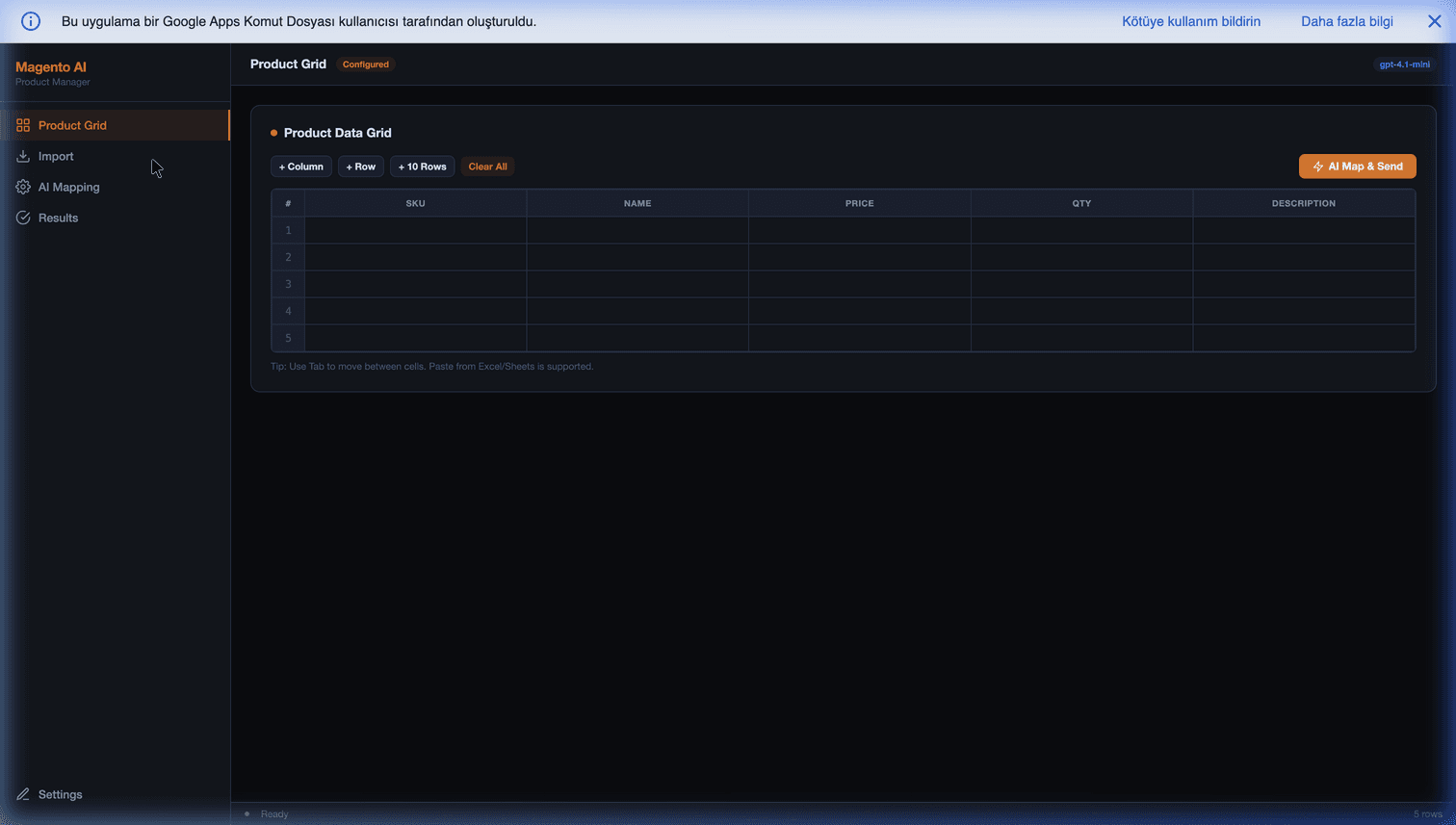
At MageSheet, we've built the Magento AI Product Manager to handle the catalog-enrichment stage of this sequence — it reads your raw supplier data from a Google Sheet, maps it to Magento's attribute sets, writes descriptions, and pushes clean products into your store.
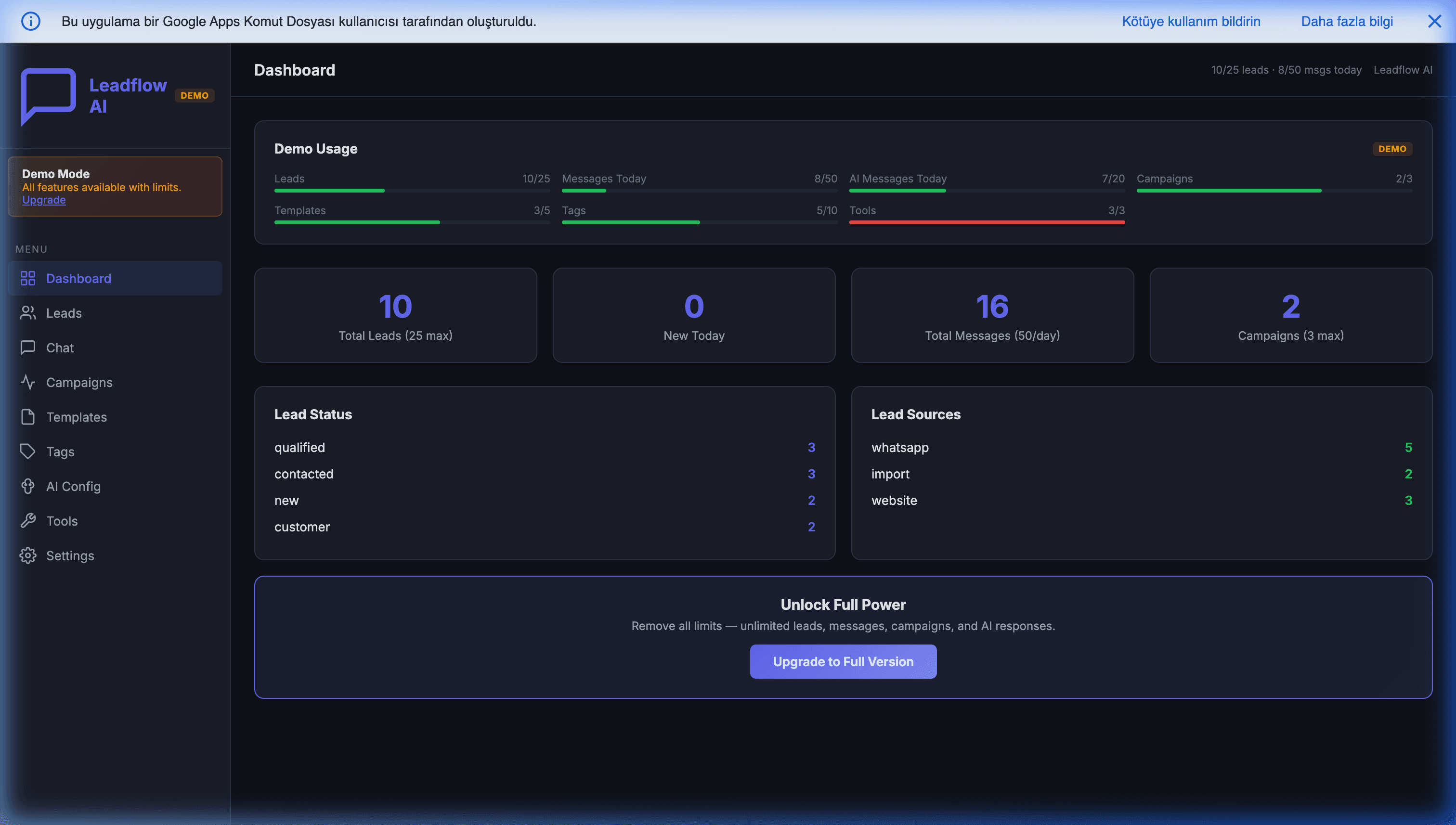
For the customer-facing side — WhatsApp-first AI support and lead capture — see our WhatsApp AI Mini CRM.
Further Reading
- How to add AI chat to your Magento 2 store — the hands-on installation guide.
- Magento AI chatbot vs live chat: which is better for your store? — the hybrid architecture breakdown.
- 5 ways AI increases e-commerce conversion rates — the conversion-rate playbook.
- AI-driven product enrichment for Magento catalogs — the supply-side automation.
- Voice commerce in 2026: why your e-commerce store needs it — where voice fits into the stack.
The future of e-commerce is conversational, visual, and intelligent. Your store should be too.
Frequently Asked Questions
What is the actual ROI of adding an AI shopping assistant to a Magento 2 store?
In the stores we have instrumented, AI shopping assistants typically lift conversion rate by 15-30% and average order value by 8-15% within 60-90 days, against a total-cost-of-ownership under $150/month for small stores (API usage + hosting). The biggest gains come from recovering high-intent sessions that would otherwise bounce on the search page. The lowest gains come from stores where most traffic is brand-loyal repeat buyers who already know exactly what they want.
Which AI model is best for an e-commerce chatbot — GPT-4, Claude, or Gemini?
For catalog-grounded shopping conversations, Claude Sonnet and GPT-4o are the current production defaults because of lower hallucination rates on grounded tasks. Gemini Pro is competitive and cheaper for high-volume stores, and Gemini Live is currently the strongest option for voice commerce because of its full-duplex audio pipeline. In practice we route: Claude/GPT for buyer-intent questions, Gemini for voice, and a smaller model (Haiku or GPT-4o-mini) for classification and routing. Budget expectation: $0.001-$0.01 per conversation depending on routing discipline.
Will an AI chatbot replace my live chat agents?
No — the pattern that works is hybrid. The AI handles 70-85% of inbound questions autonomously (stock, shipping, product comparisons, returns) and escalates the remaining 15-30% to a human when confidence is low or the user explicitly asks. Stores that try to fire live-chat agents entirely see customer satisfaction drop and complex deals collapse. Stores that layer AI on top of live chat see agent handle-time drop by roughly half and ticket volume drop by 40-60%.
How long does it take to install AI shopping on a Magento 2 store?
A basic installation with catalog grounding is a 1-2 day job for a developer familiar with Magento modules: install the module, connect the AI provider API key, index the catalog, smoke-test the conversation flow. Adding voice commerce, multilingual support, and generative UI extends this to 1-2 weeks. The larger timeline is usually content tuning — writing good product descriptions and FAQs so the AI has strong grounding material — which is where many store owners underinvest.
Does AI shopping assistance actually work for B2B Magento stores, or only B2C?
It works well for B2B, but the use cases are different. In B2B the chatbot is less about discovery and more about quoting, quick reorders, tier-price lookups, and spec sheet retrieval. Our B2B Magento customers see the biggest lift on self-serve reorders (cutting the sales-rep email back-and-forth loop) and on account-qualification at the top of the funnel. Generative UI for quote-building and comparison tables tends to matter more in B2B than in B2C.