
5 Ways AI Increases E-commerce Conversion Rates
E-commerce conversion rates average around 2-3%. That means 97 out of 100 visitors leave without buying. AI can significantly improve these numbers—here are five specific tactics, each building on principles we cover in how AI is transforming e-commerce.
Every tactic below comes with realistic metrics from Magento and Adobe Commerce stores we've instrumented. The headline numbers look large because they are large — but each one depends on baseline conditions your store needs to meet for the lift to materialize.
1. Instant Product Discovery
The biggest conversion killer is friction in finding products. Traditional search requires customers to know the right keywords, tolerate their typos, and patiently scroll through dozens of results. On mid-size catalogs, 60-75% of on-site search sessions end without a product click. AI removes this barrier.
Instead of searching "wireless bluetooth headphones noise cancelling under 100," a customer can simply say: "I need headphones for my commute that block out subway noise. Budget is around $100."
The AI understands intent, not just keywords. It considers context, preferences, and constraints to show relevant products immediately. It also handles the inverse of keyword search — specification-free discovery: "Show me something for a housewarming gift, around $50, not boring." A keyword search cannot answer that. A grounded AI assistant can.
The non-obvious requirement here is catalog grounding quality. AI product discovery is only as good as the metadata attached to your SKUs. If half your products don't have attributes filled in, the AI has nothing to match against. This is why stores often see the biggest uplift after they run a catalog-enrichment pass — see our post on AI-driven product enrichment for Magento catalogs for how to close that gap before turning on the assistant.
Impact: Stores using AI-powered product discovery report 15-30% higher conversion rates on on-site search sessions compared to keyword search, with the largest gains in apparel, electronics, and long-tail specialty categories.
2. 24/7 Sales Assistance
Every minute a customer's question goes unanswered is a minute closer to them leaving your store. Human support is expensive and off-shift most of the day. AI shopping assistants provide instant answers around the clock at near-zero marginal cost per conversation.
Common questions that AI handles without escalation:
- "Is this in stock?"
- "What size should I get? I'm 5'10" and usually wear a medium in t-shirts."
- "Can I return this if it doesn't fit?"
- "Do you offer installation or just shipping?"
- "How long does shipping take to Germany?"
- "What's the difference between the standard and pro version?"
- "Is this compatible with my Magento 2.4.6 store?"
Each answered question removes a barrier to purchase. The hybrid architecture — AI handles first contact, humans take escalations — is why AI support doesn't replace live chat so much as refocus it. We break the tradeoffs down in Magento AI chatbot vs live chat: which is better for your store? and the installation path in How to add AI chat to your Magento 2 store.
Impact: Stores with AI chat see 20-40% reduction in cart abandonment and 40-60% reduction in support ticket volume, without measurable CSAT degradation if the escalation path is built correctly.
3. Personalized Recommendations
AI doesn't show everyone the same products. It learns from the conversation in-session to make relevant suggestions:
- "Since you liked those running shoes, you might also want moisture-wicking socks — they're on a 2-for-1 this week."
- "Customers who bought this camera also got a 64GB memory card. Want me to add one at the bundle price?"
- "Based on your budget, here's the best value option, and here's the step-up if the extra 20% lift is worth $30 to you."
This isn't basic "frequently bought together" — it's contextual, conversational recommendation based on the entire interaction: what the customer said, what they looked at, what they dismissed, and what they hesitated on. The recommendation layer uses the same LLM that handles the conversation, so the upsell feels like a natural next sentence instead of a banner ad.
The timing matters as much as the content. Recommending accessories too early (before the customer has committed to the main product) creates friction. Recommending them after add-to-cart, inside the conversation, with specific rationale, converts dramatically better.
Impact: Personalized AI recommendations drive 10-30% higher average order values, with the biggest gains on accessory-heavy categories (electronics, photography, sports equipment).
4. Objection Handling
Customers often have concerns that prevent purchase: price anxiety, quality doubts, compatibility worries, return-risk aversion. A well-trained AI assistant can surface and address these proactively instead of letting them kill the session silently.
Real examples from production stores:
- Price anxiety on a $500 product: "This module pays for itself if it reduces just 5 support tickets per week. Most stores see ROI within the first month. Want me to show you the break-even math for your current ticket volume?"
- Compatibility worry: "Yes, this works with Magento 2.4.6. The one gotcha is the Inventory (MSI) module — you'll need to disable the source-selection override in admin. I can walk you through that after checkout if it helps."
- Return-risk aversion: "Returns are free within 30 days, and sizing runs true. If you're between sizes, size up for t-shirts, size down for jeans in this brand."
The trick is that AI objection handling is targeted — it only fires when the customer signals hesitation (a specific question, a long dwell on the price, a back-and-forth on specs). Blasting every visitor with reassurance feels pushy and converts worse than silence.
Impact: AI-assisted objection handling can improve conversion by 25-50% on high-consideration purchases where hesitation is the dominant failure mode.
5. Reduced Decision Fatigue
Too many choices paralyze buyers. The classic jam-study result — 24 jams on a table convert worse than 6 — is observable in any large Magento catalog. AI helps by narrowing options based on expressed needs:
"I see you're comparing these three laptops. Based on your needs — programming and light gaming — the middle option gives you the best balance of performance and value. The top option is overkill unless you're compiling large projects daily. The bottom one will struggle with modern IDEs. Want me to show you the three specs that actually differ between them?"
By acting as a trusted advisor rather than just a catalog browser, AI turns overwhelming choice into confident decisions. The key skill is honest narrowing: recommending the cheapest-good-enough option when that's the right answer, not always upselling.
The pattern backfires when the AI is too forceful — customers resent being told what to buy. The fix is framing: "Here's what I'd pick and why" rather than "You should buy this." Small prompt-tuning, large conversion delta.
Impact: Guided selling through AI reduces time-to-purchase by roughly 40% and increases post-purchase satisfaction (measured by return rate and review sentiment), which compounds over time into repeat-purchase uplift.
Measurement and Attribution
If you implement all five tactics, you'll want to actually measure the lift rather than guess. Two patterns work:
- Session-level holdout (preferred): Randomly assign 80-90% of new sessions to see the AI assistant, 10-20% to see the old experience. Compare conversion rate, AOV, and bounce over 2+ weeks. This gives a clean causal read.
- Surface-level before/after: If you can't run a holdout, measure conversion rate on the specific surfaces where AI was installed (search results, PDP, cart) before and after, not sitewide. Sitewide CR has too much noise from marketing campaigns, seasonality, and traffic mix shifts.
Avoid the trap of staring at sitewide conversion rate week-over-week — the signal-to-noise ratio is terrible, and you'll convince yourself nothing is working.
Getting Started
You don't need to implement all five at once. Start with instant product discovery and 24/7 assistance — these share the same infrastructure and give the highest immediate impact. Then layer in personalization and objection handling as you collect more customer interaction data. Save decision-fatigue reduction for last, once you understand your real choice-complexity hotspots.
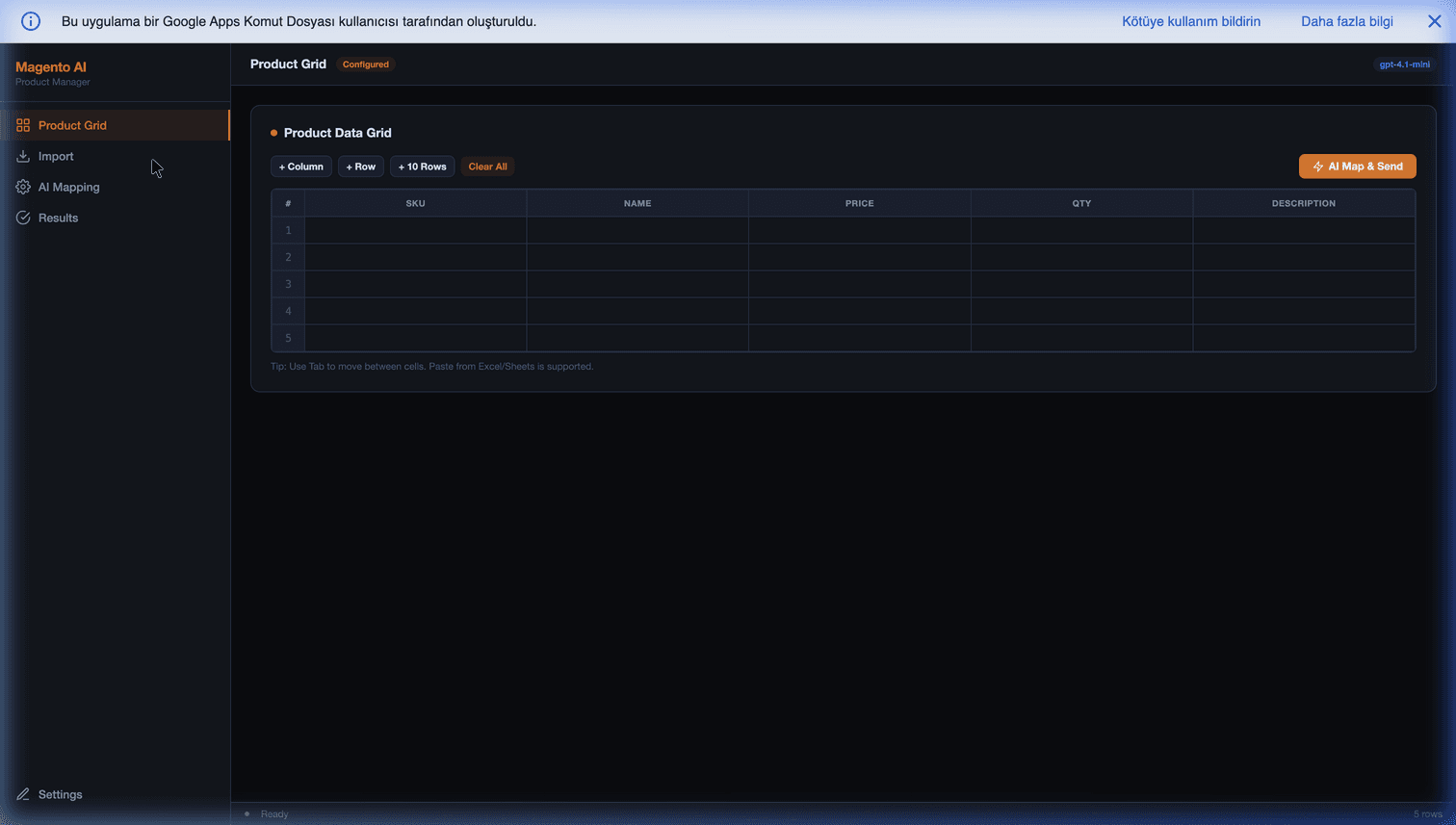
On the catalog-enrichment side, our Magento AI Product Manager handles the ingestion and attribute-mapping stage, which is a prerequisite for any of the five tactics above to work well. On the customer-conversation side, see our WhatsApp AI Mini CRM for AI-driven lead capture on WhatsApp.
Further Reading
- How AI is transforming e-commerce — the full pillar context.
- Magento AI chatbot vs live chat: which is better for your store? — the hybrid architecture choice.
- How to add AI chat to your Magento 2 store — the installation walkthrough.
- AI-driven product enrichment for Magento catalogs — fixing the data quality bottleneck.
- Voice commerce in 2026: why your e-commerce store needs it — where voice fits into the conversion funnel.
Frequently Asked Questions
What conversion rate lift should I realistically expect from adding AI to my Magento store?
In the stores we have instrumented, total conversion rate typically lifts 15-30% within 60-90 days, concentrated on high-intent sessions (search, PDP, cart). The lift is largest when baseline on-site search is weak (no synonym handling, no typo tolerance) and the catalog is large enough that discovery friction is real. Stores with already-strong search and small catalogs see smaller gains — often 5-10%. Do not expect a clean 30% lift sitewide; expect a concentrated lift in the sessions where AI actually changes behavior.
Which of the five tactics below should I implement first?
Start with instant product discovery (#1) and 24/7 sales assistance (#2) — they share the same infrastructure (catalog grounding + a conversational interface) and address the biggest revenue leak (sessions dying on the search page and in the FAQ). Personalization (#3) requires at least a few weeks of conversation data to be useful. Objection handling (#4) requires careful prompt tuning to avoid sounding pushy. Decision-fatigue reduction (#5) is the easiest to layer on last since it reuses the same assistant.
How do I actually measure conversion uplift from AI — beyond gut feel?
Run a proper holdout: on a rolling basis, show the AI assistant to 80-90% of sessions and hide it from the rest. Compare conversion rate, AOV, and session duration between the two buckets over at least two full weeks. Do not A/B-test on stale cohorts (same users routed differently over time — contamination ruins the signal). For stores that cannot run holdouts, the next-best proxy is before/after conversion rate on the specific surfaces where AI was installed (search, PDP), not sitewide CR which has too much noise.
Will AI shopping assistance cannibalize my live chat agents or marketing team?
No — it changes their workload. Live chat agents end up handling roughly 30-40% of the volume they used to, but the remaining cases are higher-complexity and higher-value, which is generally a better use of their time. Marketing teams find that AI analytics (what did customers actually ask for, regardless of what they clicked?) is one of the most valuable inputs into merchandising and content strategy they have ever had. The biggest risk is politically, not technically — teams need to understand the new role before deployment.
How much does a production AI shopping setup cost to run per month?
For a small-to-medium Magento store (10-50k monthly sessions), expect $80-$250/month in combined AI API usage (OpenAI, Anthropic, or Google) plus negligible hosting costs if you reuse the existing Magento stack. Larger stores running voice commerce and always-on background enrichment can reach $500-$1,500/month, still well below the cost of a single full-time support hire. The single biggest cost-control lever is model routing: use a cheap classifier (GPT-4o-mini, Haiku, Gemini Flash) for intent detection and a flagship model only for the final customer-facing response.